
Yoga Sutras & Samkhya: A Complete Journey Through Patanjali's Path
Video Course | 30+ Hours of In-depth Study | Includes Live Q&A Sessions | Topic-Based Flowchart Approach
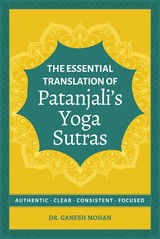
In this course, Yoga and Samkhya philosophy and psychology are organized according to connected subjects and frameworks. The Yoga Sutra is laid out in a logical flowchart, and each topic is explained clearly.
The deep wisdom of these ancient texts is made accessible in a structure that students can follow in modern times, without compromising the integrity of the teachings.
In this course you will:
Contrary to the modern image of yoga as postures and stretching, only 3 of 195 sutras address asana. The Yoga Sutras is principally:
Flowchart-Based Reorganization of the Entire Yoga Path
The Yoga Sutras are traditionally studied in their original four-chapter sequence. This course takes a different approach, developed over years of teaching: reorganizing the sutras by topic to reveal how they interconnect across the entire text.
“If we want to understand what yoga is, there is no substitute for studying Patanjali’s Yoga Sutras.”
Every teaching follows the authoritative commentary of Vyasa (c. 500 CE) and classical sub-commentaries. This ensures authentic understanding passed down through centuries, not modern reinterpretations.
Taught by Dr. Ganesh Mohan of Svastha Yoga, who brings:
The course balances:
Get free access to selected lessons
0.1 Introduction and Companion Book
FREE PREVIEW02.Student Course Guide
0.3 Downloads
0.4 Live Q&A Sessions
0.5 Connect with Students - Participant Directory
0.6 Community Space
Mohanji on the Relevance of the Yoga Sutras Today
FREE PREVIEW(Practice) Centered awareness
Outline of the program, Sutra format, Commentary of Vyasa, Philosophy & Psychology
(Practice) Stable experience of calm and clarity
Qualities of good study pathway
Layers in understanding the Yoga Sutra
Necessity for iteration
Selecting sources for Yoga Sutra study
Yoga & Samkhya as primary and complete systems
Traditional salutation to Bhagavan Patanjali & Namaha mantra chanting
Continuing from Session 1
Relevance of traditional terms in the Yoga Sutra
Understanding the Svastha flowchart map of the Yoga Sutra, Ordering of the sutras
Sensing duhkha experientially
Understanding "duhkha" and the importance of being a seeker of freedom from duhkha
Introducing the Samkhya Karika
Problem statement of duhkha from the Samkhya Karika, Seeing duhkha and being a seeker
Three sources of duhkha
Solution according to caruvaka darshana and going beyond it in Samkhya
Absolute presentation of goals in ancient Indian darshana and its difference from Western psychology
(Practice) May I have no suffering. I shall take steps to diminish duhkha in body, mind, and senses.
Yoga Sutra II.15: Yogi with discernment sees seeds of suffering
Sources of suffering and insight from the commentaries
II.16: Goal of yoga is to be free of suffering in future
(Practice) Steady breath and movement, calm mind
Continuing from the previous session
Transcending layers of self and pathway to freedom from duhkha from the ancient Upanishads
Definition of yoga from Patanjali: understanding citta vrtti nirodha
Understanding what it is not: What is nirodha and clearing possible confusions
(Practice) Growing experience of quietness in body, breath, mind
Peace is nirodha
Nirodha and freedom from duhkha (the goal of yoga)
The ultimate state as a result of nirodha - views of Yoga, Buddhism, Advaita Vedanta
(Practice) Quietness with shanti mantra
Summary of previous session
Many maps of internalization
Samkhya map - background and sources
What is the Samkhya map for
5 bhutas, Jnana Indriyas, Karma Indriyas
Introduction to Antahkarana
5 Tanmatras
Antahkarana is combined - Manas, Ahankara, Buddhi
Manas
Ahankara
Mahat/Buddhi
Singularity of I experience and the evolutionary/neurobiological reasons behind that
Mahat as the vast I and its constriction
(Practice) Quietness in the body with shanti mantra
The world and nature of reality in yoga, Changing oneself is very much possible
Karma, Samskara, Idea of the cycle of rebirth
What changes and what does not and distinguishing between them
Clarification on Ahankara and Buddhi in particular
(Practice) Calmness with inner focus on the breath
Summary of previous sessions
Abhyasa and vairagya as the top level categorization of yoga practices leading to nirodha (I.12)
Definition of abhyasa (I.13)
FREE PREVIEWQualities of sound abhyasa (I.14)
Vairagya - definition (I.15), Ramana Maharshi
(Practice) Vairagya - letting go of distractions in senses, body, and mind
Vairagya as being free of both desire and dislike, is not escapism or negativity
Stages of vairagya from Vyasa
Practical importance of vairagya

The book’s four guiding principles apply equally to this course:
The Essential Translation of Patanjali’s Yoga Sutras by Dr. Ganesh Mohan is the recommended companion book. Available separately at svastha.net/books/yoga-sutras/
All the video sessions are uploaded. You can see the ~30 hours of content right away to browse and dive into at your own convenience.
There will be Live Q&A sessions with Dr. Ganesh Mohan where questions can be answered and knowledge and practice explored further. All sessions are on Sundays. Two sessions are offered on each date — please choose the time that suits your time zone.
Session dates (All sessions are held on Sundays at 12:00 PM and 7:30 PM Indian Standard Time):

Dr. Ganesh Mohan learned yoga from childhood in the tradition of Sri Krishnamacharya through his parents, A. G. Mohan and Indra Mohan. He trained in ancient studies including Sanskrit, Vedic chanting, and Ayurveda and then went on to become a modern medical doctor. He integrates a full spectrum of holistic well-being methods in his work: movement, breathing, meditation and mindfulness, lifestyle, diet, relationships, life guidance and more. He has had extensive experience with thousands of students and patients across the world. He also directs the Svastha Yoga & Ayurveda trainings, including the Svastha Yoga Therapy Program across the globe. He is the co-author of numerous books published internationally, such as Yoga Therapy, Krishnamacharya, Yoga Reminder and Krishnamacharya In His Own Words. With his father, he is the translator of the important Sanskrit yoga texts, Yoga Yajnavalkya and Hatha Yoga Pradipika.
 A. G. Mohan is one of the foremost yoga masters in this era. He began his yoga journey in 1971, spending nearly two decades as a personal student of the legendary yogi Sri Krishnamacharya. Then he immersed himself in further wide-ranging studies of ayurveda, samkhya, tantra, ancient India dramatics, jyotisha, and more over decades. He is the author of several books on yoga, including Yoga for Body, Breath, and Mind, Yoga Therapy, Krishnamacharya: His Life and Teachings and Krishnamacharya In His Own Words.
 Indra Mohan began her yoga studies along with her husband, A.G. Mohan, in 1971. She is one of few people to receive a post-graduate diploma in yoga from Sri Krishnamacharya. She is appreciated by students not only for her extensive knowledge and clear teachings, but also for her wisdom and calm presence. She has guided many thousands of students over five decades to increase their wellbeing, manage their health problems, and find personal and spiritual transformation.
 Nitya Mohan, daughter of A. G. Mohan and Indra Mohan, was trained in yoga from a young age. She also holds a degree in music and is an exponent of Vedic chanting, having conducted numerous seminars and given concerts internationally. A skilled and experienced teacher, she has been running the Svastha training programs in Singapore for two decades.
Yes! This course contains approximately 30+ hours of video content. You can view these materials immediately and continue to access them for the duration of your enrollment.
You have access to the course for one year from the date of your enrollment.
The course contains both. It has in-depth lectures offering knowledge and insight. It also contains practices with mantra, bhava, and examples of using them in asana.
Working towards inner peace!
Getting insights from long term teachers and practitioners as the Mohan family is invaluable. There is a lot of clarity and simplicity in the explanations of how our mind works and the role of desire. I loved all the practices they taught in this course to move towards inner peace, soooo useful! I really appreciate all the teachings received.
JULIA M
Beyond Desire
Very fulfilling in content and structure of knowledge provided as well as the deep experiences made accessible in the practice parts. Thank you so much!!!
MELANIE T
Very indepth
Deepening your knowledge with the Mohans gives you a clear and profound insight of what yoga is about. Thank you for sharing your knowledge!
NANDA VAN P
Embodiment, ancient and modern approaches
HEIKE M
Very eye-opening on patterns you thought is clear anyway
Loved the practices together with the sources in the texts, very Spot on. Very clear and simple! Thank you
MIRA R
Well presented
It was very well explained. Excellent.. great charts to make it more easy to retain the concepts.
HARSHA G
Excellent!
I am very grateful for the online courses; this is a great opportunity! The course was excellent, as it balanced between theory and practice.
ANNA K
Thank you so much
I learned so much out of this course, thanks to you!
TRUSS K
Perfect pace, perfect presentation
Can not be better. Learned a lot even though I already knew the basics: the Imbalance of one person is his own balance, we should not focused only on production of Agni but balance it! Immediately understood why my practice of Pranayama was not fully effective, and when I added to to it Sitali paranayama, I started to feel better. Now I will look also at the diet.
DILLARO S
A generous and very informative course
Thank you for a very rich course. I want to highlight in particular the precisions and nuances introduced by Dr. Ganesh Mohan, as well as the deep of knowledge shared by AG Mohan. It seems to me much more than a 5.5 hours program... much to reflect on :)
NICO F

Understand the traditional approach of yoga and ayurveda to wellbeing. Learn the skills to create and sustain holistic positive transformation. Join now for US$100.
$100

Yogic wisdom, reflections, and practices to help with the challenges of loss and grief. Join now for US$60.
$60

Relax, strengthen, align, stretch, and stabilize your low back holistically with 10 expertly designed, progressive, guided practices. Join for US$25
$25

Workshop series with guidance from master teachers A. G. Mohan & Indra Mohan. Course fee: US$ 150 (Save 16%)
$150

Balance your desires and find contentment within yourself with A. G. Mohan & Indra Mohan. Course fee: US$ 60
$60

Learn the pathways to inner calm, forgiveness and peace with A. G. Mohan & Indra Mohan. Course fee: US$ 60
$60

Find the inner strength to face your fears with A.G. Mohan & Indra Mohan. Course fee: US$ 60
$60

Access this 3-course bundle to learn the different pranayamas from master yoga teachers, A. G. Mohan and Indra Mohan. Bundle fee: US$ 150 (Save 15%)
$150